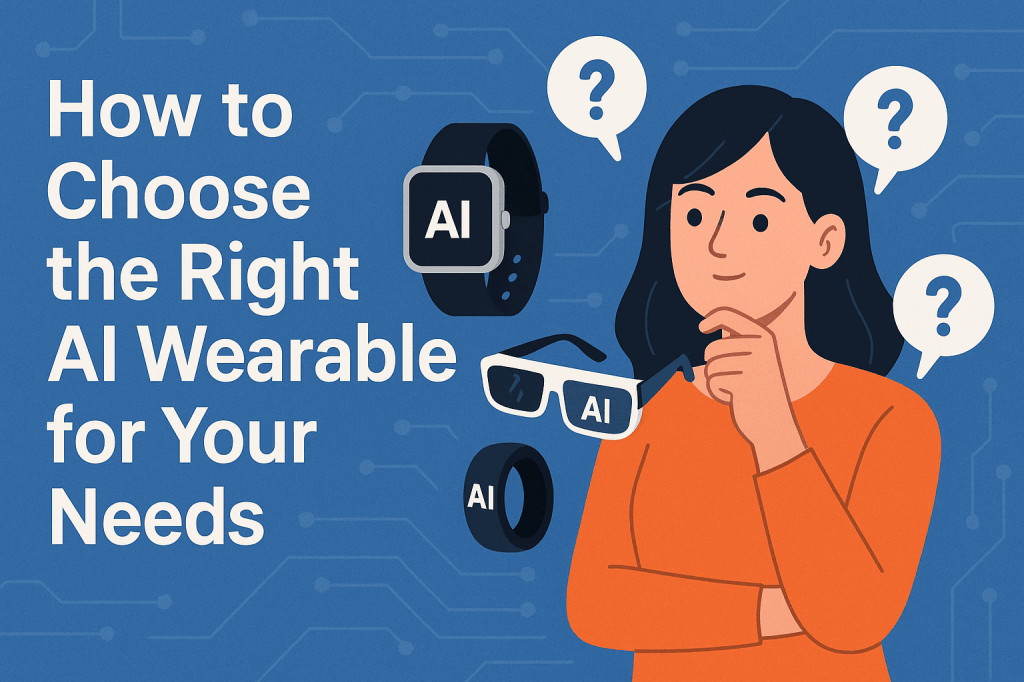
Artificial intelligence is no longer confined to high-tech laboratories or science fiction. It is becoming a part of our daily lives, and one of the most tangible ways we interact with AI is through wearable devices. AI wearables are devices designed to be worn on the body, equipped with sensors and AI algorithms that collect and analyze data, providing actionable insights to the user. These insights can help improve your health, enhance productivity, monitor safety, or simply make life more convenient.
However, the sheer number of AI wearables on the market today can make choosing the right one a daunting task. From fitness bands to AI-powered smartwatches, AR glasses, and enterprise-grade wearables, each device offers different features and serves unique purposes. Making the wrong choice can lead to wasted money, underutilized technology, and even frustration.
This guide will take a deep dive into everything you need to know to choose the right AI wearable. We will explain the different types of wearables, the critical factors to consider, popular brands and devices, and practical tips to help you make an informed decision. By the end, you will have a clear understanding of how to select a wearable that truly meets your needs and enhances your daily life.
Understanding AI Wearables
Before you decide on an AI wearable, it is important to understand what these devices are and how they work. At their core, AI wearables are devices equipped with sensors and artificial intelligence algorithms that collect, process, and analyze data. Unlike traditional wearables that only record information, AI wearables interpret the data and provide actionable insights. This intelligence allows them to offer personalized guidance, automate tasks, and even predict outcomes based on your behavior and health patterns.
Types of AI Wearables
AI wearables are not a one-size-fits-all category. They come in multiple forms, each designed to serve a specific purpose:
- Health and Fitness Trackers: These devices focus primarily on your physical well-being. They track heart rate, sleep patterns, calorie burn, steps, and even stress levels. Some advanced models, like the Whoop Strap or Fitbit Sense, use AI to analyze your daily activity and provide personalized health recommendations. For example, they can suggest optimal workout intensity based on your recovery rate or alert you to abnormal heart rate patterns that may require medical attention.
- Smart Glasses and Augmented Reality Devices: Smart glasses such as Nreal or Vuzix provide real-time information in your field of vision, enhancing both professional and personal experiences. AI enables these devices to recognize objects, translate text instantly, or provide navigation instructions without looking away from your surroundings. For professionals, this can mean hands-free access to instructions, diagrams, or live data in industrial or medical settings.
- AI-Powered Smartwatches: Smartwatches such as the Apple Watch and Samsung Galaxy Watch go beyond showing time and notifications. They integrate AI to monitor health, suggest productivity hacks, and even automate routine tasks. Some can detect irregular heart rhythms, provide adaptive fitness coaching, or remind you to take breaks for better focus and wellness.
- Specialized Enterprise Wearables: In industries like manufacturing, logistics, or healthcare, AI wearables like RealWear or Zebra Technologies devices are designed for workplace efficiency and safety. These devices can monitor worker movements, detect hazards, track environmental conditions, and provide real-time insights to managers for safer and more productive operations.
Role of AI in Wearables
Artificial intelligence is what makes these wearables truly intelligent. Sensors alone can only collect data, but AI algorithms can analyze that data to provide actionable insights. This includes personalized recommendations, predictive analytics, and automated responses. For example, an AI wearable can notice that your heart rate is elevated before your typical stress period and suggest a breathing exercise. Similarly, a smartwatch can track your sleep and automatically adjust your daily step goal based on your recovery levels. Essentially, AI turns raw data into meaningful guidance, making wearables proactive tools rather than passive trackers.
Understanding these distinctions is crucial before selecting a device. Each type of wearable serves a different purpose, and the level of AI integration can vary widely between devices. Knowing what your wearable can do, and what kind of intelligence it provides, ensures that the device will align with your personal or professional goals.
Key Factors to Consider When Choosing an AI Wearable
Choosing the right AI wearable is not just about picking the most popular or expensive device. It requires a careful evaluation of your needs, preferences, and the device’s capabilities. Here are the key factors to consider:
Purpose and Goals
The first step in selecting an AI wearable is clearly defining your purpose. Are you primarily focused on improving your health, enhancing productivity, or leveraging technology for professional tasks? For instance, health-conscious users may prioritize devices with advanced heart rate monitoring, sleep tracking, and stress detection. A fitness enthusiast might look for wearables that provide AI-driven workout recommendations and recovery analysis. On the other hand, professionals might focus on features that enhance productivity, such as real-time notifications, automated task reminders, or AR-based assistance. Clearly identifying your primary goal helps narrow down the devices that will provide the most value.
Compatibility
Compatibility is a critical factor in ensuring your wearable functions effectively. AI wearables are designed to work within specific ecosystems, such as iOS or Android, and may require companion apps to unlock full functionality. For example, an Apple Watch is deeply integrated with iPhones and Apple services, while certain smartwatches or fitness trackers work better with Android devices. Beyond smartphones, consider whether your wearable can integrate with other health or productivity apps you already use, such as MyFitnessPal, Strava, or Google Fit. Ensuring compatibility will prevent frustration and allow you to fully leverage the device’s capabilities.
Data Privacy and Security
AI wearables collect a significant amount of personal information, including health metrics, location, and daily habits. Protecting this data is crucial. Look for devices that implement strong encryption, secure cloud storage, and transparent privacy policies. Some wearables allow you to control what data is shared and with whom, which can be essential if privacy is a concern. Additionally, reputable manufacturers often comply with international data protection standards such as GDPR, ensuring your information is handled responsibly.
Battery Life and Performance
The usability of an AI wearable heavily depends on its battery life and performance. Devices that monitor health metrics 24/7 or run complex AI algorithms require sufficient battery power to operate continuously. For example, some advanced fitness trackers can last up to a week on a single charge, while smartwatches with extensive AI capabilities may require daily charging. Performance is equally important, as slow processing can result in delayed notifications, inaccurate readings, or inefficient AI recommendations. Evaluating both battery life and overall performance ensures that your device remains reliable and practical for daily use.
Design and Comfort
Since wearables are designed to be worn throughout the day, comfort and design are key considerations. Consider the weight, size, and materials used in the wearable. A bulky or heavy device can become uncomfortable, especially for extended periods. Additionally, the style of the wearable matters—some users prefer sleek, minimal designs, while others prioritize rugged, durable options suitable for workouts or outdoor activities. A device that fits comfortably into your daily routine increases the likelihood of consistent use and maximizes the benefits of AI-powered insights.
Cost versus Features
AI wearables are available at a wide range of prices, from budget-friendly fitness trackers to premium smartwatches with advanced AI features. When evaluating cost, it’s essential to consider the features that matter most to you. For instance, a basic fitness tracker may meet your health tracking needs without breaking the bank, while a high-end smartwatch may justify its price by offering predictive health insights, AI coaching, and seamless integration with other smart devices. Performing a cost-benefit analysis ensures that you invest in a wearable that delivers real value without overspending.
AI Capabilities
The level of artificial intelligence in a wearable determines how intelligent and proactive the device is. Some wearables offer simple analytics, like step counts or average heart rate. More advanced AI wearables, however, can provide predictive insights, adaptive recommendations, and automated actions. For example, certain smartwatches can analyze sleep patterns to adjust daily step goals, detect early signs of irregular heart rhythms, or provide personalized fitness coaching. Assessing AI capabilities ensures that your wearable offers meaningful guidance rather than just raw data.
Popular AI Wearable Brands and Devices
Exploring popular AI wearables can help you understand the range of features, performance, and intelligence available in the market. Different devices cater to different needs, so knowing the options is essential before making a decision.
Fitness-Focused Wearables
Fitness-focused AI wearables are designed to monitor your health and optimize your workouts. These devices use AI algorithms to provide personalized insights and actionable guidance. For example:
- Fitbit: Fitbit devices such as the Fitbit Sense and Versa models track heart rate, sleep, and activity levels. Their AI algorithms analyze trends over time to offer guidance on improving sleep quality, increasing activity, and managing stress.
- Whoop: Whoop bands focus on recovery and performance. Using AI, they monitor heart rate variability, sleep cycles, and strain levels to suggest optimal exercise intensity and rest periods. Athletes and fitness enthusiasts often use Whoop for performance optimization and injury prevention.
Smartwatches
Smartwatches combine the convenience of wearable technology with AI-powered features for health, productivity, and lifestyle management. Popular options include:
- Apple Watch: Beyond tracking steps and heart rate, the Apple Watch offers predictive health alerts, fall detection, ECG monitoring, and AI-powered coaching for workouts. Its seamless integration with the Apple ecosystem allows automated reminders, app suggestions, and real-time notifications tailored to your habits.
- Samsung Galaxy Watch: Samsung’s smartwatches offer similar health tracking features with advanced AI insights, including sleep tracking, stress monitoring, and personalized fitness guidance. Integration with Samsung Health and Android devices makes it an excellent option for Android users.
AR and Smart Glasses
Augmented reality (AR) devices and smart glasses bring AI directly into your field of vision, enhancing both work and lifestyle experiences. Examples include:
- Nreal: Nreal glasses overlay real-time information on the user’s environment. AI capabilities include object recognition, spatial mapping, and translation features, making them suitable for professional and personal applications.
- Vuzix: Vuzix smart glasses are designed for enterprise use, providing hands-free access to instructions, live data, and workflow management. AI features enhance productivity by analyzing usage patterns and offering context-aware suggestions.
Enterprise Wearables
In industrial and professional settings, AI wearables are used to increase efficiency, safety, and accuracy. Key examples include:
- RealWear: RealWear devices provide voice-controlled, hands-free assistance for workers in industries like manufacturing and construction. AI features analyze workflow patterns, monitor safety compliance, and provide real-time alerts to prevent accidents.
- Zebra Technologies: Zebra’s wearables are designed for warehouse and logistics operations. They use AI to track inventory, monitor worker movements, and optimize task assignments, enhancing both efficiency and safety.
Understanding these brands and their offerings provides a benchmark for comparing features, AI capabilities, and pricing. It also helps you identify which devices are best suited for your specific needs, whether for personal health, productivity, or professional use.
Tips for Making the Final Decision
After understanding the types of AI wearables, their features, and popular brands, it is essential to approach the final decision strategically. Here are some practical tips to ensure you choose a device that aligns with your needs and lifestyle:
Trial Periods and Demos
Whenever possible, try the wearable before committing to a purchase. Many manufacturers and retail stores offer trial periods or in-store demonstrations. Testing the device allows you to evaluate:
- Comfort: Wear the device for several hours to see if it feels natural and unobtrusive.
- Ease of Use: Interact with the interface, apps, and AI features to ensure they are intuitive.
- Functionality: Experience features like health tracking, notifications, or AR capabilities in real-world scenarios.
This hands-on experience can prevent post-purchase dissatisfaction and help you identify which device truly meets your expectations.
User Reviews and Expert Recommendations
Online reviews and expert opinions are invaluable resources when selecting a wearable. They offer insights into long-term performance, reliability, and usability that may not be obvious from product descriptions. Pay attention to:
- Consistent Feedback: Look for recurring praises or complaints across multiple reviews.
- Specific Use Cases: Find reviews from users with goals similar to yours, such as fitness tracking, professional productivity, or industrial applications.
- Expert Analysis: Experts often provide comparisons between devices, highlighting strengths, weaknesses, and unique AI capabilities.
Combining user feedback with expert analysis ensures you make an informed decision based on both practical experience and technical evaluation.
Future-Proofing
AI wearables are evolving rapidly, so consider devices that are designed to adapt and stay relevant. Future-proofing your choice can save money and extend the lifespan of your wearable. Key considerations include:
- Software Updates: Devices that receive regular updates often improve over time with new AI features and better performance.
- Upgradability: Check if the wearable can integrate with new apps, accessories, or services.
- Scalability: Some devices are part of an ecosystem, allowing you to expand capabilities by connecting additional wearables or smart devices.
Investing in a future-proof wearable ensures that you benefit from continuous improvements in AI technology and get the most value from your purchase.
Setting Realistic Expectations
While AI wearables are powerful tools, they are not magic solutions. They provide guidance, insights, and automation, but they cannot replace discipline, professional advice, or personal judgment. For example, a fitness tracker can suggest optimal workouts based on your heart rate, but consistent effort and proper nutrition are still required to achieve results. Similarly, AI alerts on health anomalies should be complemented by medical consultation. Setting realistic expectations helps you use the wearable effectively and avoids disappointment.
Conclusion
Choosing the right AI wearable is a process that requires thoughtful consideration of your personal goals, lifestyle, and technological needs. These devices are no longer simple trackers; they are intelligent companions capable of monitoring your health, enhancing productivity, and providing actionable insights tailored to your habits and routines. By understanding the different types of wearables, evaluating key factors such as compatibility, data privacy, AI capabilities, design, and cost, you can select a device that offers meaningful value rather than just technological novelty.
Health and fitness enthusiasts should look for wearables that provide detailed tracking, AI-driven insights, and predictive guidance. Professionals may prioritize productivity-enhancing features such as real-time notifications, task automation, or AR-assisted workflows. In industrial or workplace settings, specialized enterprise wearables can increase efficiency, monitor safety, and deliver critical real-time information. The right device depends on your specific needs, but the core principle remains the same: choose a wearable that aligns with your objectives and enhances your daily life.
As AI wearable technology continues to evolve, staying informed about the latest innovations is key. Exploring AI companies can give you insights into emerging trends, new devices, and advanced features that may meet your needs. A valuable resource to start with is the Top AI Companies Directory, which lists companies at the forefront of AI development, including those producing cutting-edge wearable technologies.
In summary, AI wearables are powerful tools when selected carefully. They transform data into actionable insights, making your life healthier, more productive, and more efficient. By following the guidelines in this comprehensive guide—understanding device types, evaluating critical factors, considering popular brands, and applying practical decision-making tips—you can confidently choose a wearable that truly meets your needs today and adapts to your evolving lifestyle tomorrow.
 TechX
TechX 
Leave a comment